OS:lab6课下基础#
1. 管道#
1.1 初窥管道#
管道是一种典型的进程间单向通信的方式,分为有名管道和匿名管道两种,匿名管道只能在有公共祖先的进程间使用,在MOS中,我们要实现匿名管道。
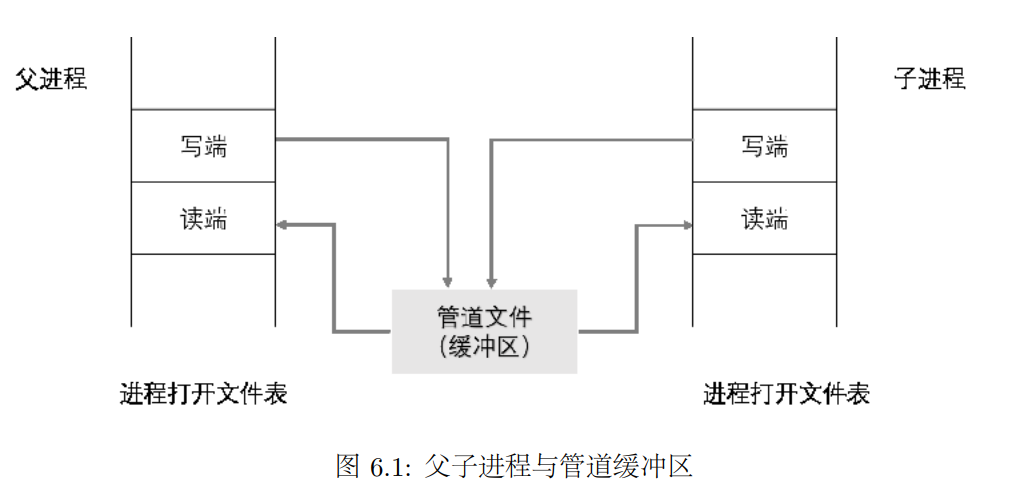
管道是一种只存在于内存中的文件,在MOS中,父进程调用pipe函数时会打开两个新的文件描述符:一个表示只读端,一个表示只写端,两个描述符都映射到同一片内存区域。
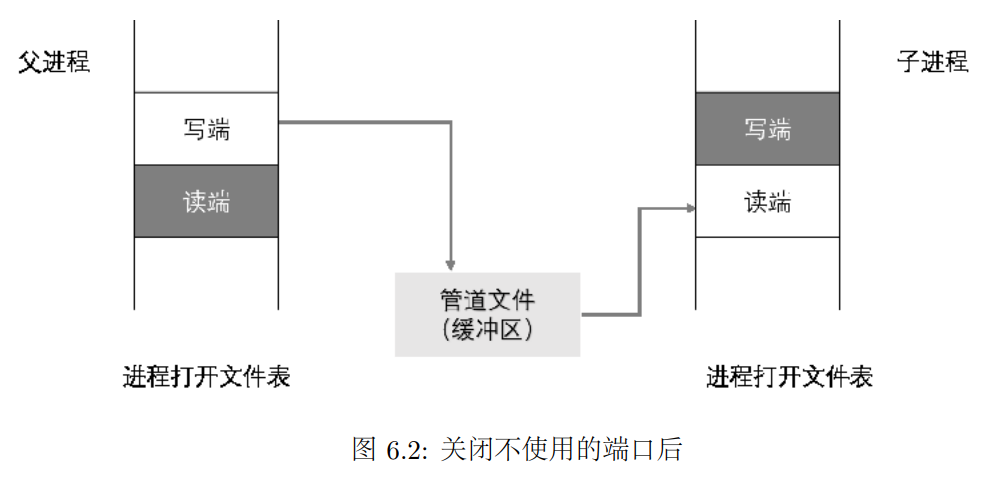
在fork的配合下,子进程会复制父进程的两个文件描述符,从而在==父子进程间形成了四个(父子各有一读一写)的指向同一片内存区域的文件描述符,父子进程可根据需要关掉自己不用的一个,从而实现单向管道通信。==
1.2 MOS中pipe的使用与实现#
MOS中pipe的实现
 1
 2
 3
 4
 5
 6
 7
 8
 9
10
11
12
13
14
15
16
17
18
19
20
21
22
23
24
25
26
27
28
29
30
31
32
33
34
35
36
37
38
39
40
41
42
43
44
45
46
47
| int pipe(int pfd[2]) {
int r;
void *va;
struct Fd *fd0, *fd1;
/* Step 1: Allocate the file descriptors. */
if ((r = fd_alloc(&fd0)) < 0 || (r = syscall_mem_alloc(0, fd0, PTE_D | PTE_LIBRARY)) < 0) {
goto err;
}
if ((r = fd_alloc(&fd1)) < 0 || (r = syscall_mem_alloc(0, fd1, PTE_D | PTE_LIBRARY)) < 0) {
goto err1;
}
/* Step 2: Allocate and map the page for the 'Pipe' structure. */
va = fd2data(fd0);
if ((r = syscall_mem_alloc(0, (void *)va, PTE_D | PTE_LIBRARY)) < 0) {
goto err2;
}
if ((r = syscall_mem_map(0, (void *)va, 0, (void *)fd2data(fd1), PTE_D | PTE_LIBRARY)) <
0) {
goto err3;
}
/* Step 3: Set up 'Fd' structures. */
fd0->fd_dev_id = devpipe.dev_id;
fd0->fd_omode = O_RDONLY;
fd1->fd_dev_id = devpipe.dev_id;
fd1->fd_omode = O_WRONLY;
debugf("[%08x] pipecreate \n", env->env_id, vpt[VPN(va)]);
/* Step 4: Save the result. */
pfd[0] = fd2num(fd0);
pfd[1] = fd2num(fd1);
return 0;
err3:
syscall_mem_unmap(0, (void *)va);
err2:
syscall_mem_unmap(0, fd1);
err1:
syscall_mem_unmap(0, fd0);
err:
return r;
}
|
首先为fd0和fd1两个文件描述符分配空间(物理页)
然后给fd0对应的虚拟地址分配一页物理内存并将fd1对应的虚拟地址映射到这一页物理内存
通过管道pipe进行共享的实际上是共享页面机制PTE_LIBRARY
1.3 管道的读写#
关于管道结构体Pipe的定义如下
1
2
3
4
5
| struct Pipe {
u_int p_rpos; // read position
u_int p_wpos; // write position
u_char p_buf[PIPE_SIZE]; // data buffer
};
|
p_rpos:下一个要从管道读的数据的位置,读者更新
p_wpos:下一个要向管道写的数据的位置,写者更新
p_buf:缓冲区,类似于环形缓冲区,读写的位置i实际上是i%PAGE_SIZE
当读者从管道读取数据时,要将p_buf[p_rpos%PIPE_SIZE]拷贝走,然后读自增一。==需要注意的是,管道的缓冲区此时可能还没有被写入数据,所以如果管道数据为空,即当p_rpos>=p_wpos时,进程切换到写者运行。==
当写者相管道中写入数据时,将数据存入p_buf[p_wpos%PIPE_SIZE],然后写自增一。==需要注意缓冲区可能存在满溢的情况,所以需要在p_wpos-p_rpos<PIPE_SIZE时方可运行。==
当缓冲区出现空或满的情况时,我们还需要根据另一端是否关闭来判断是否要返回,另一端已经关闭则返回0即可,否则切换进程运行。
判断管道另一端是否关闭_pipe_is_closed:对于一个匿名管道,我们分配了三页空间:读数据的文件描述符rfd一页,写数据的文件描述符wfd一页,剩下一页是被两个文件描述符共享的管道数据缓冲区pipe.
则有pageref(rfd)+pageref(wfd)=pageref(pipe),若另一端关闭则有pageref(rfd)=pageref(pipe)或pageref(wfd)==pageref(pipe)
Exercise 6.1 pipe_read, pipe_write, _pipe_is_closed
 1
 2
 3
 4
 5
 6
 7
 8
 9
10
11
12
13
14
15
16
17
18
19
20
21
22
23
24
25
26
27
28
29
30
31
32
33
34
35
36
37
38
39
40
41
42
43
44
45
46
47
48
49
50
51
52
53
| static int _pipe_is_closed(struct Fd *fd, struct Pipe *p) {
int fd_ref, pipe_ref, runs;
/* Exercise 6.1: Your code here. (1/3) */
do {
runs = env->env_runs;
fd_ref = pageref(fd);
pipe_ref = pageref(p);
} while (runs != env->env_runs);
return fd_ref == pipe_ref;
}
static int pipe_read(struct Fd *fd, void *vbuf, u_int n, u_int offset) {
int i;
struct Pipe *p;
char *rbuf;
/* Exercise 6.1: Your code here. (2/3) */
p = (struct Pipe *)fd2data(fd);
rbuf = (char *)vbuf;
for (i = 0; i < n; i++) {
while (p->p_rpos >= p->p_wpos) {
if (i >= 1 || _pipe_is_closed(fd, p)) {
return i;
} else {
syscall_yield();
}
}
rbuf[i] = p->p_buf[(p->p_rpos++) % PIPE_SIZE];
}
return n;
}
static int pipe_write(struct Fd *fd, const void *vbuf, u_int n, u_int offset) {
int i;
struct Pipe *p;
char *wbuf;
/* Exercise 6.1: Your code here. (3/3) */
p = (struct Pipe *)fd2data(fd);
wbuf = (char *)vbuf;
for (i = 0; i < n; i++) {
while (p->p_wpos - p->p_rpos >= PIPE_SIZE) {
if (_pipe_is_closed(fd, p)) {
return i;
} else {
syscall_yield();
}
}
p->p_buf[(p->p_wpos++) % PIPE_SIZE] = wbuf[i];
}
return n;
}
|
1.4 管道关闭的正确判断#
MOS采用时间片轮转的进程调度算法,抢占式的进程管理意味着用户进程随时可能会被打断。
由于管道的共享性质,无法保证_pipe_is_closed用于管道另一端的判断一定返回正确的结果。
进程使用pipe_close来关闭管道的端口,该函数的实质是通过两次系统调用unmap来解除文件描述符fd和数据缓存区pipe的映射。由于进程切换的存在,并不能保证两次系统调用可以在==同一进程时间片内被执行==,两次系统调用之间可能因为进程切换而被打断,故fd和对pipe的pp_ref也不能保证同步被写入,影响了管道是否关闭的正确性。
在MOS中只有syscall_*开头的系统调用函数是原子操作
_pipe_is_closed函数返回正确结果的条件为
- 写端关闭
pageref(p[0]) == pageref(pipe) - 读端关闭
pageref(p[1]) == pageref(pipe)
对于更一般的情况,pageref(p[0]) +pageref(p[1]) = pageref(pipe),**也就是说pipe的引用次数总比pipe要高。**在close函数中
1
2
3
4
5
6
| static int pipe_close(struct Fd *fd) {
// Unmap 'fd' and the referred Pipe.
syscall_mem_unmap(0, (void *)fd2data(fd));
syscall_mem_unmap(0, fd);
return 0;
}
|
先解除pipe映射再解除fd映射,会使pipe引用次数-1先于fd,在两个unmap间隙导致pageref(pipe)=pageref(fd),这一点可以通过控制fd与pipe的map/unmap顺序解决进程竞争导致的非同步写入问题:使fd的引用次数-1先于pipe,这样即使在两个unmap的间隙,也有pageref(pipe) > pageref(fd)成立。
==或者说改变map/unmap顺序使得pageref(pipe) > pageref(fd)在非管道关闭时恒成立==
Exercise 6.2 调整pipe_close中的umap顺序
1
2
3
4
5
6
| static int pipe_close(struct Fd *fd) {
// Unmap 'fd' and the referred Pipe.
syscall_mem_unmap(0, fd);
syscall_mem_unmap(0, (void *)fd2data(fd));
return 0;
}
|
Exercise 6.3 调整dup函数中的map顺序
 1
 2
 3
 4
 5
 6
 7
 8
 9
10
11
12
13
14
15
16
17
18
19
20
21
22
23
24
25
26
27
28
29
30
31
32
33
34
35
36
37
38
39
40
41
42
43
44
45
46
47
48
| int dup(int oldfdnum, int newfdnum) {
int i, r;
void *ova, *nva;
u_int pte;
struct Fd *oldfd, *newfd;
/* Step 1: Check if 'oldnum' is valid. if not, return an error code, or get 'fd'. */
if ((r = fd_lookup(oldfdnum, &oldfd)) < 0) {
return r;
}
/* Step 2: Close 'newfdnum' to reset content. */
close(newfdnum);
/* Step 3: Get 'newfd' reffered by 'newfdnum'. */
newfd = (struct Fd *)INDEX2FD(newfdnum);
/* Step 4: Get data address. */
ova = fd2data(oldfd);
nva = fd2data(newfd);
/* Step 5: Dunplicate the data and 'fd' self from old to new. */
if (vpd[PDX(ova)]) {
for (i = 0; i < PDMAP; i += PTMAP) {
pte = vpt[VPN(ova + i)];
if (pte & PTE_V) {
// should be no error here -- pd is already allocated
if ((r = syscall_mem_map(0, (void *)(ova + i), 0, (void *)(nva + i),
pte & (PTE_D | PTE_LIBRARY))) < 0) {
goto err;
}
}
}
}
if ((r = syscall_mem_map(0, oldfd, 0, newfd, vpt[VPN(oldfd)] & (PTE_D | PTE_LIBRARY))) <0) {
goto err;
}
return newfdnum;
err:
/* If error occurs, cancel all map operations. */
panic_on(syscall_mem_unmap(0, newfd));
for (i = 0; i < PDMAP; i += PTMAP) { panic_on(syscall_mem_unmap(0, (void *)(nva + i)));
}
return r;
}
|
2. Shell#
shell指“为使用者提供操作界面”的软件,他接受用户的命令然后调用相关的应用程序,MOS实现了CLI shell
2.1 完善spawn函数#
spawn函数的作用是帮助我们调用文件系统中的可执行文件并执行(初步观察我们的命令就是通过spawn函数运行的,例如输入ls.b,调用可执行文件ls.b)。
Exercise 6.5 spawn
- 文件系统打开对应的文件(二进制ELF,*.b)
- 申请新的进程控制块
- 将目标程序加载到子进程的地址空间中并为他们分配物理页面
- 为子进程初始化地址空间
- 设置子进程的寄存器
- 将父进程的共享页面映射到子进程的地址空间
- 设置子进程可执行
  1
  2
  3
  4
  5
  6
  7
  8
  9
 10
 11
 12
 13
 14
 15
 16
 17
 18
 19
 20
 21
 22
 23
 24
 25
 26
 27
 28
 29
 30
 31
 32
 33
 34
 35
 36
 37
 38
 39
 40
 41
 42
 43
 44
 45
 46
 47
 48
 49
 50
 51
 52
 53
 54
 55
 56
 57
 58
 59
 60
 61
 62
 63
 64
 65
 66
 67
 68
 69
 70
 71
 72
 73
 74
 75
 76
 77
 78
 79
 80
 81
 82
 83
 84
 85
 86
 87
 88
 89
 90
 91
 92
 93
 94
 95
 96
 97
 98
 99
100
101
102
103
104
105
106
107
108
109
110
111
112
113
114
115
116
117
118
119
120
121
122
123
| int spawn(char *prog, char **argv) {
// Step 1: Open the file 'prog' (the path of the program).
// Return the error if 'open' fails.
int fd;
if ((fd = open(prog, O_RDONLY)) < 0) {
return fd;
}
// Step 2: Read the ELF header (of type 'Elf32_Ehdr') from the file into 'elfbuf' using
// 'readn()'.
// If that fails (where 'readn' returns a different size than expected),
// set 'r' and 'goto err' to close the file and return the error.
int r;
u_char elfbuf[512];
/* Exercise 6.4: Your code here. (1/6) */
if ((r = readn(fd, elfbuf, sizeof(Elf32_Ehdr))) != sizeof(Elf32_Ehdr)) {
if (r >= 0) {
r = -E_NOT_EXEC;
}
goto err;
}
const Elf32_Ehdr *ehdr = elf_from(elfbuf, sizeof(Elf32_Ehdr));
if (!ehdr) {
r = -E_NOT_EXEC;
goto err;
}
u_long entrypoint = ehdr->e_entry;
// Step 3: Create a child using 'syscall_exofork()' and store its envid in 'child'.
// If the syscall fails, set 'r' and 'goto err'.
u_int child;
/* Exercise 6.4: Your code here. (2/6) */
if ((child = syscall_exofork()) < 0) {
r = child;
goto err;
}
// Step 4: Use 'init_stack(child, argv, &sp)' to initialize the stack of the child.
// 'goto err1' if that fails.
u_int sp;
/* Exercise 6.4: Your code here. (3/6) */
if ((r = init_stack(child, argv, &sp)) < 0) {
goto err1;
}
// Step 5: Load the ELF segments in the file into the child's memory.
// This is similar to 'load_icode()' in the kernel.
size_t ph_off;
ELF_FOREACH_PHDR_OFF (ph_off, ehdr) {
// Read the program header in the file with offset 'ph_off' and length
// 'ehdr->e_phentsize' into 'elfbuf'.
// 'goto err1' on failure.
// You may want to use 'seek' and 'readn'.
/* Exercise 6.4: Your code here. (4/6) */
if ((r = seek(fd, ph_off)) < 0) {
goto err1;
}
if ((r = read(fd, elfbuf, ehdr->e_phentsize)) != ehdr->e_phentsize) {
if (r >= 0) {
r = -E_NOT_EXEC;
goto err1;
}
}
Elf32_Phdr *ph = (Elf32_Phdr *)elfbuf;
if (ph->p_type == PT_LOAD) {
void *bin;
// Read and map the ELF data in the file at 'ph->p_offset' into our memory
// using 'read_map()'.
// 'goto err1' if that fails.
/* Exercise 6.4: Your code here. (5/6) */
if ((r = read_map(fd, ph->p_offset, &bin)) < 0) {
goto err1;
}
// Load the segment 'ph' into the child's memory using 'elf_load_seg()'.
// Use 'spawn_mapper' as the callback, and '&child' as its data.
// 'goto err1' if that fails.
/* Exercise 6.4: Your code here. (6/6) */
if ((r = elf_load_seg(ph, bin, spawn_mapper, &child)) != 0) {
goto err1;
}
}
}
close(fd);
struct Trapframe tf = envs[ENVX(child)].env_tf;
tf.cp0_epc = entrypoint;
tf.regs[29] = sp;
if ((r = syscall_set_trapframe(child, &tf)) != 0) {
goto err2;
}
// Pages with 'PTE_LIBRARY' set are shared between the parent and the child.
for (u_int pdeno = 0; pdeno <= PDX(USTACKTOP); pdeno++) {
if (!(vpd[pdeno] & PTE_V)) {
continue;
}
for (u_int pteno = 0; pteno <= PTX(~0); pteno++) {
u_int pn = (pdeno << 10) + pteno;
u_int perm = vpt[pn] & ((1 << PGSHIFT) - 1);
if ((perm & PTE_V) && (perm & PTE_LIBRARY)) {
void *va = (void *)(pn << PGSHIFT);
if ((r = syscall_mem_map(0, va, child, va, perm)) < 0) {
debugf("spawn: syscall_mem_map %x %x: %d\n", va, child, r);
goto err2;
}
}
}
}
if ((r = syscall_set_env_status(child, ENV_RUNNABLE)) < 0) {
debugf("spawn: syscall_set_env_status %x: %d\n", child, r);
goto err2;
}
return child;
err2:
syscall_env_destroy(child);
return r;
err1:
syscall_env_destroy(child);
err:
close(fd);
return r;
}
|
2.2 解释shell命令#
我们在user目录下提供了ls.c , cat.c , echo.c等几个用户程序模拟Linux下同名命令(后续Shell挑战性任务可以参考MIT-xv6中其他命令的实现),当我们输入命令时,Shell程序sh.c调用了spawn函数,使其能够读取相应的可执行文件,并加载到新进程中运行。
解释shell命令通过parsecmd完成,或者说就是解析输入的字符串。
- 如果碰到重定向符号
< | >- 读下一个单词,打开这个单词代表的文件,然后将文件内容复制给标准输入或标准输出
- 如果碰到管道符号
|- 首先建立管道
pipe,然后fork - 对于父进程,将管道的写者复制给标准输出
- 对于子进程,将管道的读者复制给标准输入
Exercise 6.5 parsecmd
 1
 2
 3
 4
 5
 6
 7
 8
 9
10
11
12
13
14
15
16
17
18
19
20
21
22
23
24
25
26
27
28
29
30
31
32
33
34
35
36
37
38
39
40
41
42
43
44
45
46
47
48
49
50
51
52
53
54
55
56
57
58
59
60
61
62
63
64
65
66
67
68
69
70
71
72
73
74
75
76
77
78
79
80
81
82
83
84
85
86
87
88
89
90
91
92
93
94
95
96
| int parsecmd(char **argv, int *rightpipe) {
int argc = 0;
while (1) {
char *t;
int fd, r;
int c = gettoken(0, &t);
switch (c) {
case 0:
return argc;
case 'w':
if (argc >= MAXARGS) {
debugf("too many arguments\n");
exit();
}
argv[argc++] = t;
break;
case '<':
if (gettoken(0, &t) != 'w') {
debugf("syntax error: < not followed by word\n");
exit();
}
// Open 't' for reading, dup it onto fd 0, and then close the original fd.
// If the 'open' function encounters an error,
// utilize 'debugf' to print relevant messages,
// and subsequently terminate the process using 'exit'.
/* Exercise 6.5: Your code here. (1/3) */
if ((fd = open(t, O_RDONLY)) < 0) {
debugf("failed to open %s\n");
exit();
}
if ((r = dup(fd, 0)) < 0) {
debugf("failed to duplicate file to <stdin>\n");
exit();
}
close(fd);
break;
case '>':
if (gettoken(0, &t) != 'w') {
debugf("syntax error: > not followed by word\n");
exit();
}
// Open 't' for writing, create it if not exist and trunc it if exist, dup
// it onto fd 1, and then close the original fd.
// If the 'open' function encounters an error,
// utilize 'debugf' to print relevant messages,
// and subsequently terminate the process using 'exit'.
/* Exercise 6.5: Your code here. (2/3) */
if ((fd = open(t, O_WRONLY)) < 0) {
debugf("failed to open %s\n");
exit();
}
if ((r = dup(fd, 1)) < 0) {
debugf("failed to duplicate file to <stdout>\n");
exit();
}
close(fd);
break;
case '|':;
/*
* First, allocate a pipe.
* Then fork, set '*rightpipe' to the returned child envid or zero.
* The child runs the right side of the pipe:
* - dup the read end of the pipe onto 0
* - close the read end of the pipe
* - close the write end of the pipe
* - and 'return parsecmd(argv, rightpipe)' again, to parse the rest of the
* command line.
* The parent runs the left side of the pipe:
* - dup the write end of the pipe onto 1
* - close the write end of the pipe
* - close the read end of the pipe
* - and 'return argc', to execute the left of the pipeline.
*/
int p[2];
/* Exercise 6.5: Your code here. (3/3) */
if ((r = pipe(p)) < 0) {
debugf("failed to create pipe\n");
exit();
}
if ((*rightpipe = fork()) == 0) {
dup(p[0], 0);
close(p[0]);
close(p[1]);
return parsecmd(argv, rightpipe);
} else {
dup(p[1], 1);
close(p[1]);
close(p[0]);
return argc;
}
break;
}
}
return argc;
}
|